Chinese Missile Breaks Through Island Chain: Why is Trump Silent?
The Storm Media Commentary, July 8, 2026
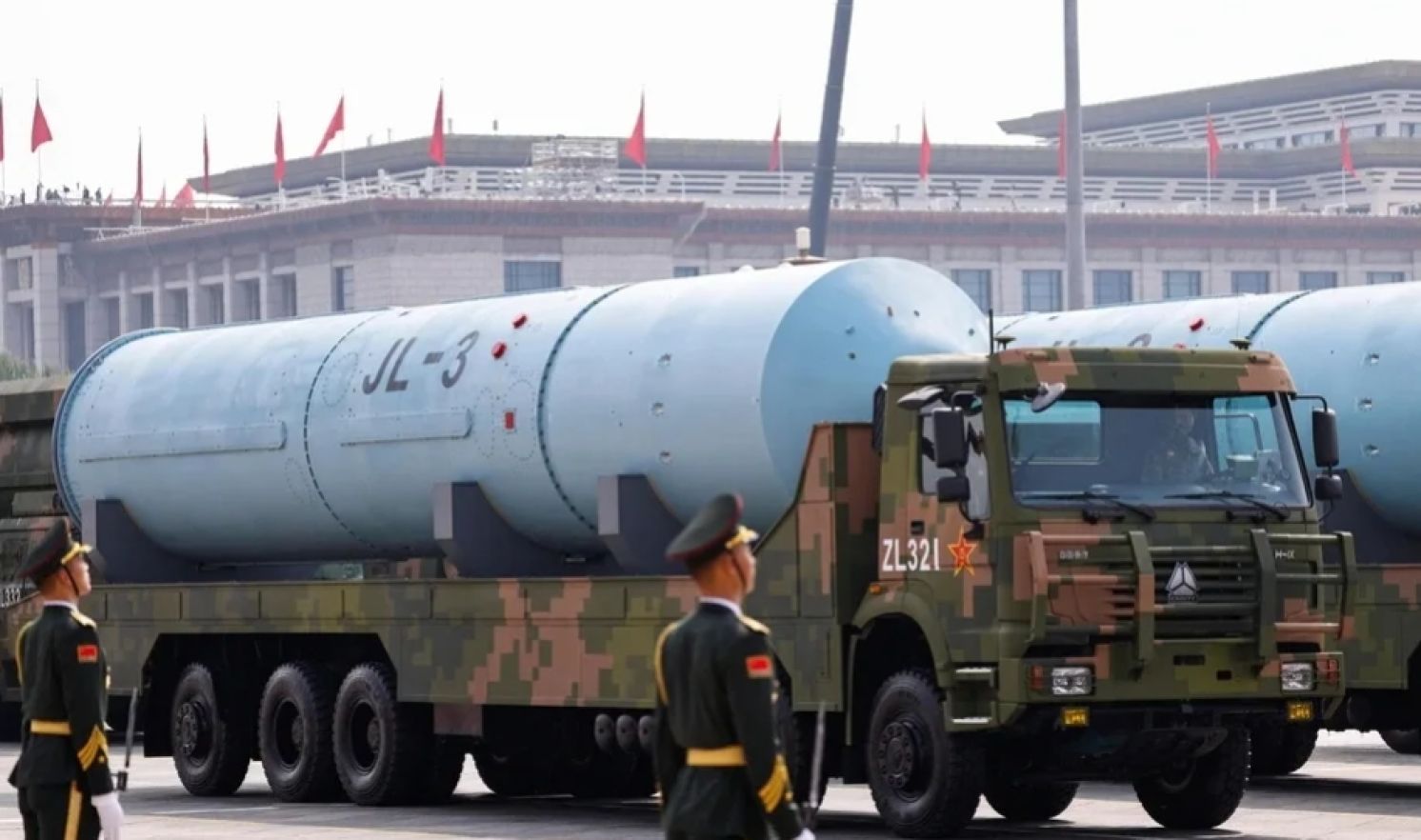
As tensions in East Asia continue to rise, mainland China launched a JL submarine-launched strategic missile into the Pacific Ocean, breaking beyond the containment line of the First Island Chain. The launch took place after American Independence Day on July 4 and before the anniversary of the Marco Polo Bridge Incident on July 7. Its intention to target the United States and Japan was evident, while also serving as an indirect warning of the consequences should the two countries intervene in a Taiwan Strait conflict. Yet what has most disappointed America's allies is that U.S. President Donald Trump has once again remained silent.
The United States responded only through the Department of State, stating that Beijing's actions lacked sufficient transparency. It noted that China's rapid expansion of its nuclear capabilities in recent years has raised serious international concern and urged Beijing to participate in arms control talks.
The mainland’s Ministry of Foreign Affairs stated that it had "notified relevant countries in advance." However, China informed countries such as Australia only a few hours before the launch. Australian government officials said this could hardly be considered adequate notification and did not comply with the principles of advance notification and information transparency advocated by the Hague Code of Conduct.
China's submarine-launched missile test was primarily directed at the United States and Japan. The controversy surrounding Japanese Prime Minister Sanae Takaichi's remarks that "a Taiwan emergency is a Japanese emergency" had not yet subsided. From Chinese rhetoric about "decapitation" to escalating diplomatic tensions between China and Japan, Beijing has called on Chinese tourists and students to reduce travel to and study in Japan, while also taking countermeasures against Japanese goods. China has used seafood import restrictions as a means of pressure and conducted live-fire exercises in the East China Sea and surrounding waters to warn Japan. The countries most directly affected by this submarine-launched missile test are those along the First Island Chain, particularly Japan, followed by the United States, as well as U.S. allies including Australia, New Zealand, and the Pacific island nations.
In addition to launching an intercontinental missile, the People's Liberation Army (PLA) also conducted the "Joint Sea-2026" naval exercise with the Russian Navy in waters off Qingdao. As Japan strengthens the U.S.-Japan alliance and expands joint military exercises among Japan, the United States, and the Philippines, China is also actively seeking closer coordination with North Korea and Russia. Launching an intercontinental missile into the Pacific serves to bolster China-Russia joint operations and reinforce nuclear deterrence.
The mainland also sent an indirect message to Taiwan. As Japan and the Philippines negotiated their Exclusive Economic Zone (EEZ), Taiwan was excluded from the talks. In June, the China Coast Guard entered Japan's EEZ east of Taiwan while escorting Chinese research vessels and other government ships. Beijing has implemented a "near-seas strategy" toward Taiwan, not only rendering the median line of the Taiwan Strait effectively obsolete and treating the waters east of Taiwan as part of its near seas, but also expanding its activities eastward toward the Diaoyutai Islands and Scarborough Shoal, steadily advancing toward the First Island Chain. The Trump administration has taken little meaningful action in response.
Mr. Trump's silence on Taiwan is not without precedent. During their meeting in May, Chinese President Xi Jinping firmly stated that the Taiwan issue was the most important issue in U.S.-China relations. When reporters raised the Taiwan issue while Mr. Trump and Mr. Xi were at the Temple of Heaven in Beijing, Mr. Trump declined to comment. The United States' Six Assurances stipulate that U.S. arms sales to Taiwan would not be subject to consultation with Beijing, yet Mr. Trump remarked that this commitment was "a long time ago."
Mr. Trump has repeatedly adopted a passive and silent stance on Taiwan's security. At the same time, he has consistently described Taiwan as a "chip thief," declaring that he intends to increase U.S. semiconductor manufacturing capacity to 60 percent during his presidency and threatening to impose a 200 percent tariff on Taiwan otherwise. Mr. Trump has also demanded that Taiwan pay "protection money," while arguing that Taiwan is too far away for the United States to defend effectively. The administration of President Lai Ching-te, meanwhile, has remained silent in the face of what it views as Mr. Trump's groundless criticism.